
Dear ImGui from Rust
The blenderui-imgui crate gives you the real Dear ImGui in Rust, with a safe layer, the full FFI underneath, a one-call runner and headless tests.
- Rust
- Dear ImGui
Want Dear ImGui in Rust without fighting unsafe or a pile of build scripts? The blenderui-imgui crate gives you a safe, generated API over the real Dear ImGui, drawn by BUI in Blender’s look. A window is one function call, and the C++ is compiled for you by Cargo.
You get two layers in one crate: a safe layer (&str, &mut T, slices) for everyday code, and the raw FFI (imgui::sys) for anything the safe layer doesn’t cover.
Add the crate
blenderui-imgui isn’t on crates.io yet Coming soon (the main blenderui crate is). Until it is, use a git dependency:
[dependencies]blenderui-imgui = { git = "https://github.com/ppmpreetham/BUI" }The first build compiles Dear ImGui, the BUI backend and BUI’s C kit through CMake, so you need what the main crate needs: Rust 1.88 or newer, CMake and a C/C++ compiler. Nothing else is downloaded. The installation page has the details.
Hello from Rust
use blenderui_imgui as imgui;
fn main() {    let mut value = 0.5f32;    let mut text = String::from("Edit me");    imgui::run("Hello", [1280, 800], move || {        imgui::show_demo_window();        imgui::begin("Hello");        imgui::slider_float("Value", &mut value, 0.0, 1.0);        imgui::input_text("Text", &mut text);        if imgui::button("Reset") {            value = 0.5;        }        imgui::text(&format!("value {value:.2}"));        if let Some(dl) = imgui::get_window_draw_list() {            let p = imgui::get_cursor_screen_pos();            dl.add_circle_filled([p.x + 10.0, p.y + 10.0], 8.0, imgui::im_col32(71, 114, 179, 255));        }        imgui::end();    });}
cargo run opens a window with ImGui’s demo and yours.
Your closure owns its state (move), so there’s no static mut and no Rc<RefCell<…>>.
imgui::run(title, size, frame)opens a BUI window and callsframeinside each ImGui frame until the window closes. It creates an ImGui context if none is current. Without a window system it returns at once.- A panic in
framecloses the window and resumes fromrun(), so you get the usual panic message.
BUI’s own example is cargo run -p blenderui-imgui --example demo from bindings/rust; add -- --screenshot demo.png to render it headless.
The safe layer
It’s generated from imgui.h. Dear ImGui’s own documentation and demo are written in C++, so here’s how its names and types turn into Rust:
| Dear ImGui (C++) | Rust |
|---|---|
ImGui::Button("OK") / ImGui::Button("OK", size) |
button("OK") / button_ex("OK", size): optional arguments move to an _ex variant |
const char* |
&str |
float* v (an in/out value) |
&mut f32; Option<&mut T> where C++ accepts NULL |
float col[3] |
&mut [f32; 3] |
| A pointer and a count | A slice |
char* buf, size_t size in InputText* |
&mut String (it grows as needed) |
ImVec2 |
impl Into<ImVec2>: [x, y] or (x, y) |
draw_list->AddLine(...) |
draw_list.add_line(...): methods on the structs |
ImGuiTextFilter filter("x") |
ImGuiTextFilter::new_ex("x"), an Owned<T> that’s deleted when dropped |
About lifetimes: references ImGui returns (get_io(), get_style(), draw lists) are 'static in the signatures, but they’re only valid while their ImGui context lives. Don’t keep them past it.
The FFI: imgui::sys
Everything in cimgui.h is in imgui::sys, generated from the same description, with no bindgen or libclang:
- Every struct with its C++ layout (
ImVector<T>, unions, bit fields as storage words). - Every enum value as a constant.
- Every C function: 879 of the 894 C functions. The 15 missing ones take a C
va_list.
sys is re-exported at the crate root, so imgui::ImGuiWindowFlags_NoTitleBar and imgui::ImVec2 work directly. The names are those of cimgui.h, Dear ImGui’s generated C API.
Configure and test: imgui::App
run is a shortcut for App. Use App directly for options or for tests:
let frame = || imgui::show_demo_window();let mut config = imgui::Config::default();config.font_size = 15.0; // pixels at scale 1; 0 is Blender's UI text sizelet mut app = imgui::App::with_config(Some("Tool"), [1280, 800], config, frame);app.run();Config has blender_style, blender_font, font_size, follow_scale and settle_frames.
For tests, App::headless(size, frame) renders into an off-screen raster:
use blenderui_imgui as imgui;
#[test]fn renders_and_types() {    let mut name = String::new();    let mut app = imgui::App::headless([800, 600], move || {        imgui::begin("Test");        imgui::input_text("Name", &mut name);        imgui::end();    });    app.render(3);                // request and run 3 frames    app.click(100.0, 60.0);       // pixel coordinates in the app    app.type_text("hello");    assert!(app.save_png("shot.png"));}
The app also has mouse_move, mouse_down, mouse_up, scroll, key, key_down, key_up, pixels() and frame_count(). The crate’s own tests (tests/headless.rs) are a fuller example: they check struct sizes against C++, widgets and input, owned objects and a panic in the frame.
Blender widgets
Turn on the blender-widgets feature and ImGui’s widgets become Blender’s own:
[dependencies]blenderui-imgui = { git = "https://github.com/ppmpreetham/BUI", features = ["blender-widgets"] }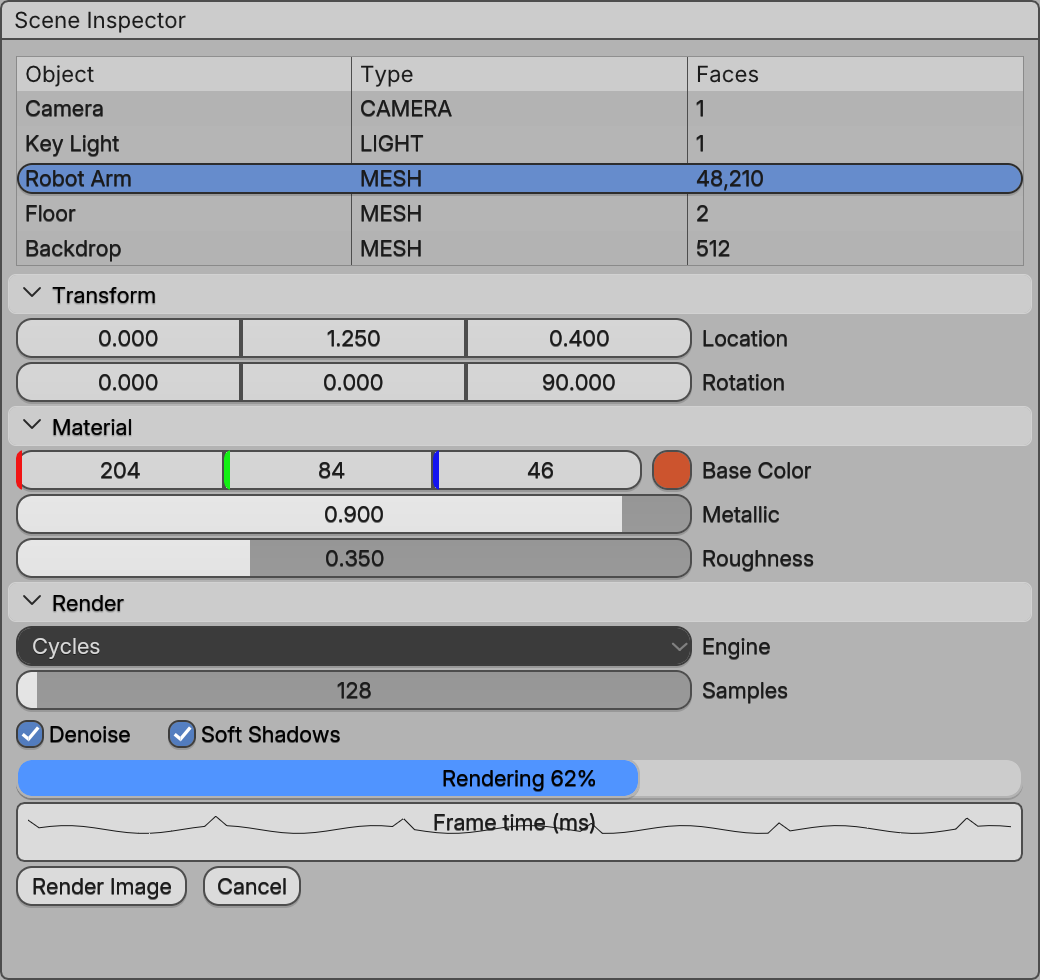
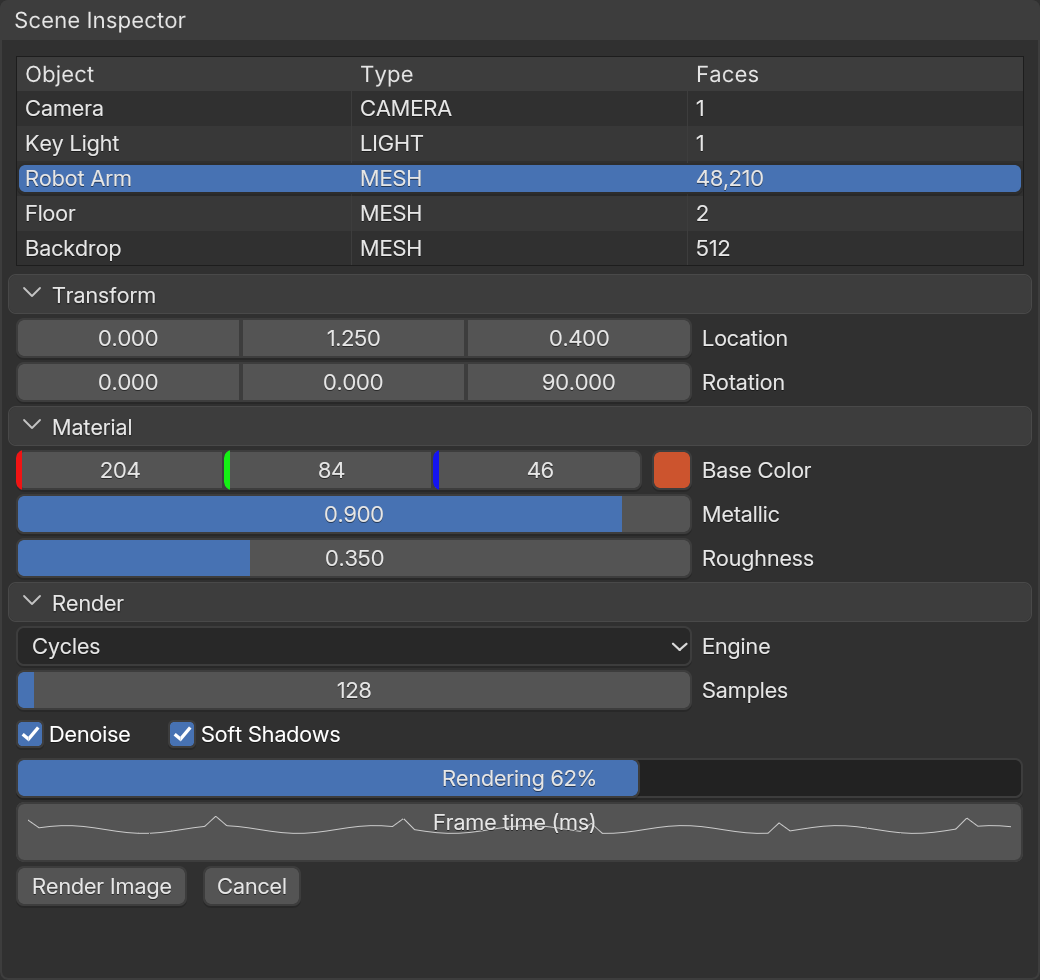
examples/site/imgui_inspector.cpp). The blender-widgets feature switches on the same widgets for your Rust code.At runtime, imgui::has_blender_widgets(), imgui::blender_widgets() and imgui::set_blender_widgets(on) check and switch them. What changes has its own page.
Good to know
- One thread. Dear ImGui has one current context: create apps and call
imguifunctions from one thread. - The safe layer covers 366 of ImGui’s 399 functions. The rest (
va_list, untypedvoid*, C callbacks) are insys. See coverage. - UI scale:
imgui::ui_scale()andimgui::set_ui_scale(scale)read and set BUI’s scale.
Next steps
Last updated